
Foundational Messaging: Your Real Differentiator

Foundational Messaging: Your Real Differentiator

ATOMIC
Featured On

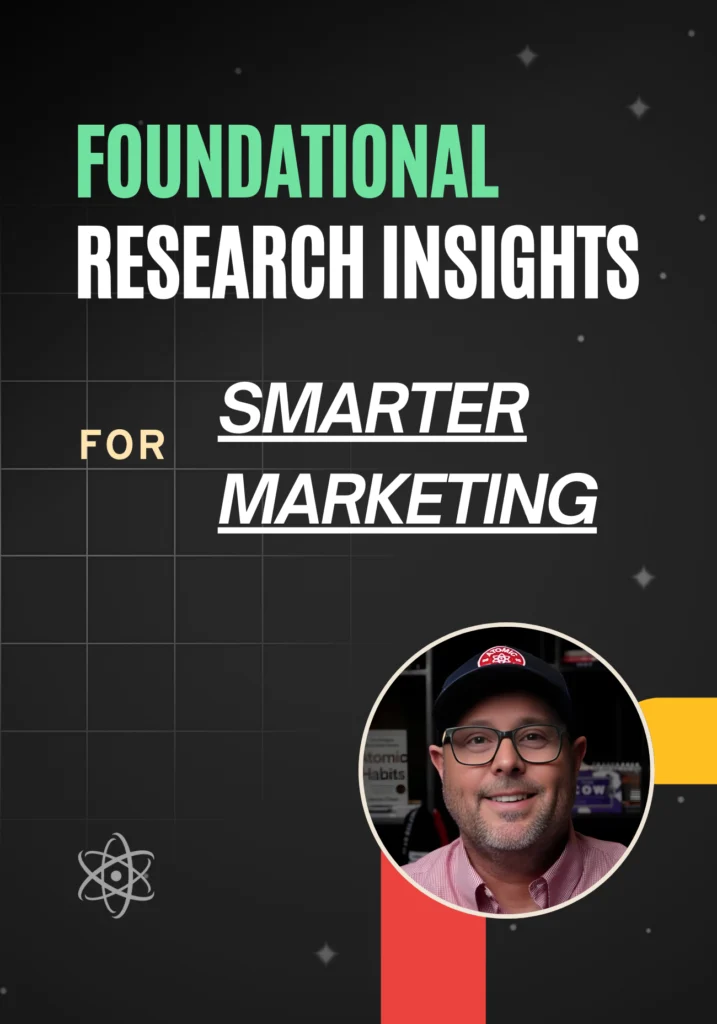
Most dealerships struggle because their messaging sounds like everyone else. Gayle Rogers argues that in 2025, buyers choose the dealer as much as the vehicle, and the vehicle itself is often just a bundle of similar features. Differentiation comes from identity: who you are, the community you serve, and why you choose to serve them. This blog shows decision-makers how to move beyond borrowed slogans toward honest, recorded conversations that surface beliefs, principles, and the way leadership shapes the customer experience. When marketing is built on that foundation, it becomes clear, memorable, and sustainably different from the lot across town.
Key Takeaways:

Vehicles are interchangeable
Category features converge; shoppers often see models as variations on the same theme, so product specs alone rarely create defensible differentiation.

Buyers choose dealers
Customers are selecting you the dealer, GM, and team as much as the vehicle, which puts your identity and philosophy at the center of the decision.

Identity drives differentiation
Your principles and the way you operate shape process, culture, and customer treatment; that identity is what sets you apart locally.

Messaging starts with beliefs
Foundational messaging begins with candid conversation, recorded and transcribed, to capture honest beliefs and the details that make you different.
“When the next time someone buys a car, they’re choosing you as much as they are choosing the vehicle… The vehicle itself is just a collection of features… what they’re really choosing is you.”
Vehicles Are Interchangeable
Walk any competitive row and the patterns are obvious: similar trims, overlapping features, and look-alike options. Rogers notes that loyalty to a specific brand is not what it was decades ago; to many buyers, the car is a collection of features that mostly look the same. When feature sets converge, product-first messaging blends into the background. That is why generic taglines and stock phrases underperform in local markets. The remedy is not a louder slogan; it is a clearer identity.
Buyers Choose Dealers
If vehicles blur together, what actually decides the sale? People choose you. They choose the dealer, the GM, and the team they must trust for financing, service, and support. Rogers is explicit about this shift: buyers are choosing the store as much as the unit, which elevates leadership, philosophy, and process from backstage to center stage. Treat every touchpoint greeting, appraisal, finance, delivery as proof of who you are. The message is not just what you say; it is how you operate when the lot is busy and the clock is ticking.
Identity Drives Differentiation
Identity is not a tagline. It is the combination of beliefs and behaviors that govern how your team treats customers and one another. Rogers ties this directly to leadership: who you are as an owner or GM dictates the processes you install and the way business gets done. That becomes your local advantage. If your principle is transparency, it should appear in your appraisals, menu presentation, and post-sale follow-up. If your principle is speed, measure and publish cycle times. The aim is to translate values into observable actions customers can feel.
Messaging Starts With Beliefs
This work begins with a conversation, not a campaign. Rogers recommends sitting down to talk about your business, customers, and community without trying to force a clever line. Record it. Transcribe it. Mine the language for the details that reveal who you are: why you care to serve this town, what you will not compromise, and how you expect people to feel after they leave your store. Those specifics become your foundational statements, not the generic claims every dealer can copy. From there, build a messaging architecture: a one-sentence promise, three belief-driven pillars, and proof stories pulled from real moments on your floor.
A 90-Day Foundation Plan
Weeks 1–2: Conduct a recorded leadership interview about identity, beliefs, and the community you serve. Pull exact phrases that sound like you.
Weeks 3–4: Convert insights into a one-sentence promise and three pillars. Draft a culture statement that clarifies how customers will be treated because of who you are.
Weeks 5–6: Publish an About hub, a “Why We Serve [City]” page, and service and financing pages that reflect your beliefs in copy and process.
Weeks 7–8: Capture two proof stories per pillar from recent customer experiences and add them to your site and sales playbook.
Weeks 9–12: Replace generic homepage copy and banners with identity-led language. Train managers to coach against the pillars so operations and messaging match.
Throughout: Avoid empty claims like “family-owned” or “satisfaction guaranteed.” They are not legacy; they are placeholders. Lead with the principles that would belong in your eulogy the things you would want remembered.
FAQs
Why can’t we just lean on manufacturer branding?
Short answer:
Because brand loyalty isn’t what it used to be and features blur, so dealer identity decides.
Long answer:
Rogers points out that vehicles look similar and brand loyalty has weakened compared to decades past. That makes the dealer’s philosophy and behavior the tiebreaker. If your identity is unclear, you become interchangeable with the store across town. Anchor your message in who you are and how you operate so buyers can perceive a meaningful difference before and after the sale.
What exactly is “foundational messaging” for a dealership?
Short answer:
It is language distilled from honest conversations about who you are and why you serve this community.
Long answer:
Foundational messaging is built from recorded, candid interviews that surface beliefs, principles, and the details that make your store distinct. Transcribing and combing those conversations preserves the fine points that generic slogans miss. The output becomes a promise, three pillars, and proof stories that guide website copy, ads, and sales talk tracks. It is identity translated into consistent language customers can feel.
How do leadership beliefs show up in day-to-day operations?
Short answer:
They determine how people treat customers and the processes you enforce.
Long answer:
Rogers ties differentiation to leadership. Who you are as an owner or GM shapes policy, tone, and expectations, which customers experience as speed, fairness, clarity, or care. If leadership prizes transparency, it should be visible in pricing conversations and documentation. If leadership values community, it should be visible in partnerships and service gestures. Messaging works when it matches the behaviors leadership protects.
Why are common phrases like “family-owned” weak differentiators?
Short answer:
They’re generic and say nothing about your actual beliefs or behavior.
Long answer:
Rogers challenges leaders to define legacy by what would be said at their eulogy, not by boilerplate claims. Phrases like “family-owned” or “satisfaction guaranteed” are easy to copy and lack substance. Replace them with principles you will defend under pressure and examples of how customers benefit. Specifics create memory; clichés create noise.
How should we start if we have no clear message today?
Short answer:
Schedule a recorded leadership conversation and build from the transcript.
Long answer:
Begin with a one-hour interview focused on who you are, why you serve this community, and what you will not compromise. Record, transcribe, and highlight the lines that sound like you. From there, craft a promise, three pillars, and two proof stories per pillar. Update core pages first and align sales scripts so operations reinforce the message. Consistency makes the difference visible and durable.

Contact Us
Ready to turn your website into a true profit center? Book a strategy session with Gayle Rogers at Atomic Studio to define your foundational message, align operations with identity, and translate beliefs into durable differentiation across your market.

More Articles

04 Begin
It’s about time for you to get started.
Ready to revolutionize your marketing approach with proactive, trust-building conversations? Fill out our form today and discover how we’ve reinvented conversational marketing. Your next success story starts here.

in·ter·loc·u·tor
/ˌin(t)ərˈläkyədər/
noun
FORMAL
a person who takes part in a dialogue or conversation.