
Digital Marketing for Car Dealerships Starts Here

Digital Marketing for Car Dealerships Starts Here
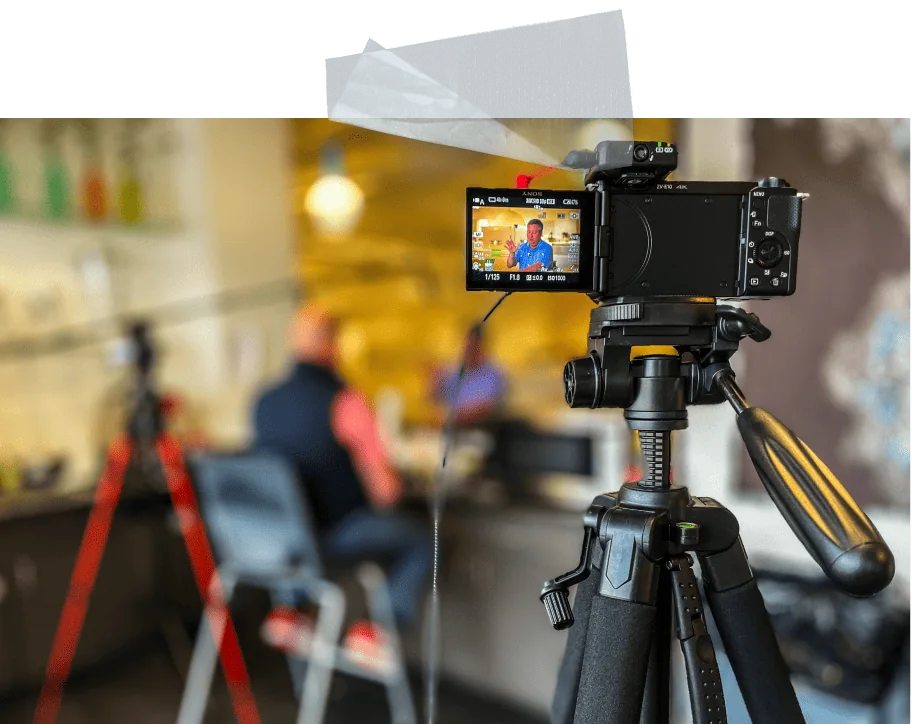
If your dealership has no real digital strategy yet, don’t start with ads. Start with getting your team comfortable on camera.
ATOMIC
Featured On
Most dealerships with a small marketing budget go straight to ads. That’s the wrong first move.
People trust content from employees more than branded content from the company itself, by a wide margin, 76% versus branded messaging, according to Speakap research. A dealership with no on-camera content has no way to tap into that trust at all, no matter how much ad budget it spends.
Key Points

Start with getting the whole team comfortable on camera, not with ad spend

Make it mandatory across the store, including the GM, so nobody can opt out

Have people share opinions and stories, not expertise, since you can’t be wrong about your own opinion

Once the team is comfortable, put budget toward ad promos, boosting, and editing

Scale from there into vehicle walkarounds, dedicated crews, and a full long-term content plan
Start With On-Camera Comfort, Not Ads
The highest-leverage first move for a dealership with a small budget is getting the whole team comfortable talking on camera. Everything else builds on top of that.
A dealership with no video presence yet has nothing to promote, boost, or scale. Building that comfort first opens every other door later.
“That’s probably the highest leverage thing that you can do… that opens up the doors to everything else later.”
Ads amplify content that already exists. Without on-camera content in the first place, there’s nothing worth boosting yet.
No. The GM, sales managers, and service team all need to participate. Leadership involvement makes it much easier to ask everyone else to do it too.
Make It Mandatory, and Keep It Personal
Getting a team on camera for the first time works best as a mandatory expectation, not a volunteer opportunity. Pushback and excuses are normal, and the fix is making it part of the job.
The content itself should stay personal: opinions, stories, favorite local spots, favorite customers, not technical expertise. That sidesteps the impostor syndrome that stops most people from starting.
“If you’re talking about things that they personally like or dislike or have done or like to do, they can’t be wrong, because it is their personal opinion.”
Personal opinions don’t require expertise. Nobody can be wrong about their favorite place to eat or their favorite customer story.
Yes, at least occasionally. It’s much easier to make on-camera content mandatory for the team when leadership has done it first.
Put the Next Budget Toward Ad Promos
Once the team is comfortable on camera, the next round of budget goes toward ad promos, boosting existing content, and editing. That’s the natural next step, not a separate strategy.
Ad promos require more direct calls to action and more performative energy than casual posts. That’s a harder ask for someone with no camera experience.
“If you get somebody the first time and you’re like, okay, we’re gonna do an ad promo… it is very hard to just get people to perform. But if they’ve had some time in front of the camera, they’re more likely to just be conversational and easy going.”
Performing on cue is a much harder skill than sharing a casual opinion. Camera comfort has to come first, or the ad promos will feel forced.
Boosting the content that’s already working, and possibly hiring an editor to clean up the raw footage into something more polished.
When to Scale Into a Bigger Strategy
Once ad promos and boosted content are working consistently, it’s time to expand into longer-form content like vehicle walkarounds, and possibly bring in dedicated on-site crews and editors.
The bigger goal at this stage is a long-term, holistic content plan built around current inventory and revenue-generating services, not one-off posts made because it happened to be Tuesday.
“You start thinking about it from more of a long-term holistic approach… creating long-form, short-form conversations around those things purposely, not just, hey, let’s post something today.”
Consistent, good results from the on-camera and ad-promo phase. That’s the signal a dealership is ready to invest in a bigger, more structured plan.
Longer-form content like vehicle walkarounds, dedicated on-site production, and a content calendar organized around inventory and services, instead of scattered one-off posts.
Build the Plan That Grows With You
We build digital marketing strategy that starts where a dealership actually is, not where a bigger budget would let it start. If your team isn’t camera-comfortable yet, that’s exactly where we’d begin too.

Contact Us
Ready to turn your website into a true profit center? Book a strategy session with Gayle Rogers at Atomic Studio to define your message pillars, build a repeatable publishing rhythm, and turn consistency into compounding attention.

More Articles
04 Begin
It’s about time for you to get started.
Ready to revolutionize your marketing approach with proactive, trust-building conversations? Fill out our form today and discover how we’ve reinvented conversational marketing. Your next success story starts here.
in·ter·loc·u·tor
/ˌin(t)ərˈläkyədər/
noun
FORMAL
a person who takes part in a dialogue or conversation.